Skip to content

BUILDING & RENOVATING

Construction & Renovation Loans

Funding released in stages as the build progresses, against a fixed price contract the lender can hold. Set up properly, it is calm. Set up badly, it stalls at frame stage.

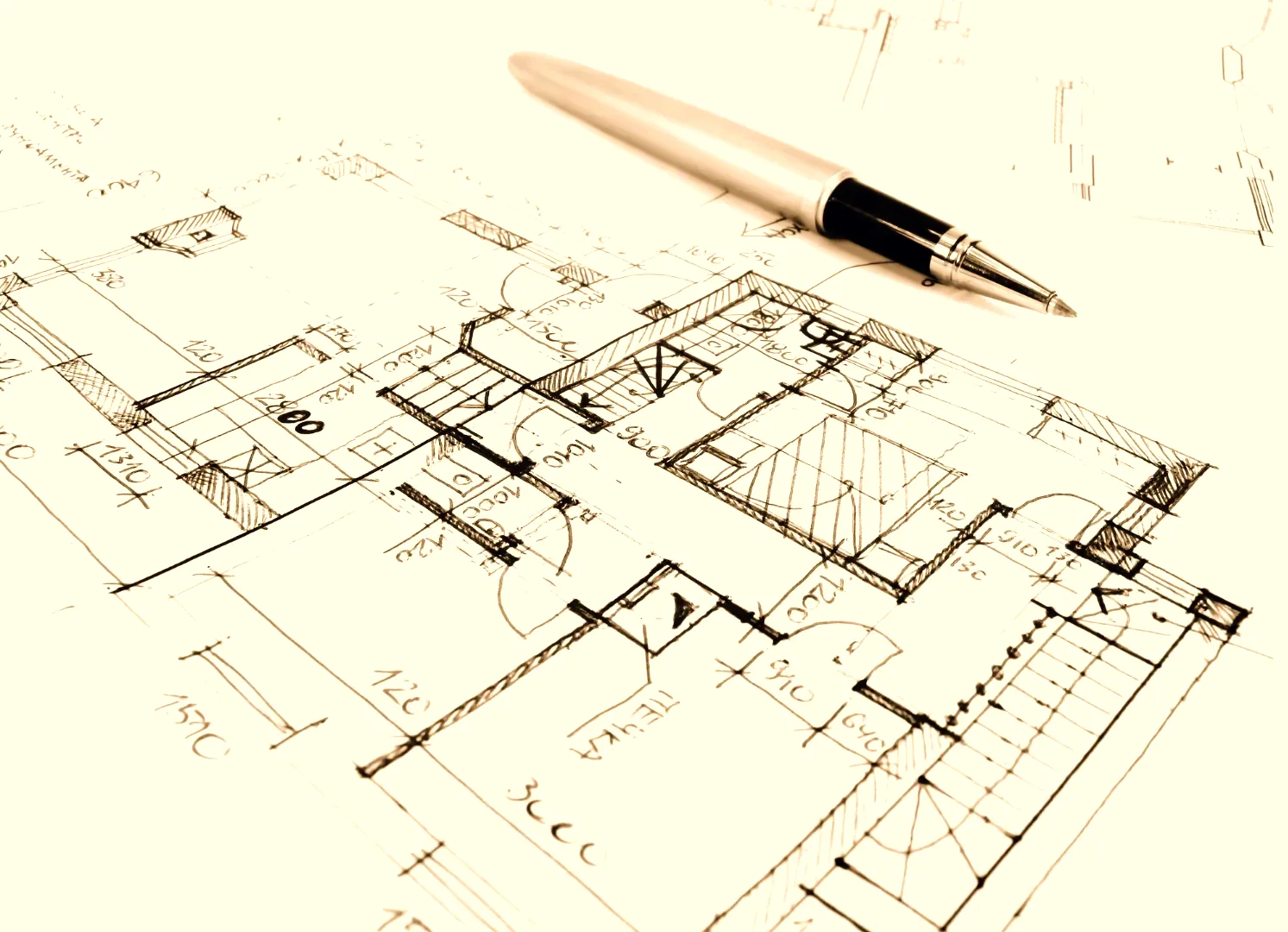
Plans and a fixed price contract, the two documents a construction lender actually funds against.
  • Funding

    Released in stages

  • Valuation basis

    On completion

  • Lender panel

    40+

  • Interest during build

    On drawn funds only

Is this you?

If any of these are true, we can help.

Talk it through
  • Buyers building on a block they have bought or already own.
  • Owners doing a knockdown rebuild on the family home.
  • Renovators whose scope has outgrown a simple equity release.
  • Investors adding a dwelling or subdividing an existing site.
  • Anyone whose builder has asked for a progress payment schedule the current loan cannot support.

How it works

Three moves, in plain words.

  1. 01

    Before you sign anything

    Get an indicative capacity and a realistic view of the on-completion value. Signing a building contract before finance is understood is the most expensive mistake in this category.

  2. 02

    Application with the contract and plans

    The lender assesses the borrower and the project together. Missing builder documents are the usual delay.

  3. 03

    Construction valuation

    As is and on completion, based on the plans, the specification and the contract.

Talk to us before you sign the contract

Two different products, often confused

Construction lending against renovation lending
Construction loanEquity release for renovation
Funds releasedIn stages, against invoices and inspectionsIn one amount at settlement
Valuation basisAs if complete, on plans and the contractCurrent value, as is
Builder requirementsLicensed builder, fixed price contract, insuranceOften none for smaller works
Interest during worksCharged on drawn funds onlyCharged on the full amount from day one
Best forNew builds, rebuilds and structural workCosmetic and moderate works without a full contract
AdministrationHigher. Inspections, invoices, variationsLow

The rule of thumb is scope. If the work is structural, requires a building permit, or involves a licensed builder under a fixed price contract, it is construction lending. If it is a kitchen, a bathroom, flooring and paint, an equity release is usually simpler and faster.

The detail

How progress draws work

The lender does not hand the builder the money. It pays each stage after the builder invoices for it and, at most stages, after a valuer confirms the work is done. You are charged interest only on what has been drawn, which is why construction repayments start small and climb.

A typical progress payment schedule
StageWhat it covers
DepositPaid on signing the building contract, usually from your own funds rather than the loan
Base or slabSite works, footings and the slab poured
FrameFrame erected and approved
Lock-upExternal walls, roof, windows and external doors installed
FixingInternal fit-out, cabinetry, doors and fittings
Practical completionFinal stage, released after the final inspection and certificate

When the money actually moves on a forty-week build

Repayments start small and climb, because interest is charged on the drawn balance rather than the approved limit. The step most households are unprepared for is the last one, where the loan converts and the full repayment begins in the same month as the move.

Illustrative timings and stage percentages only. Your draw schedule is set by the building contract and varies by builder and state.

View as a table
WhenWhat happens
On signingThe builder’s deposit, commonly around five per cent, paid from your own funds before any construction draw exists.
Weeks 1 to 6Base stage drawn, around fifteen per cent. Interest starts here, and only on what has been drawn.
Weeks 6 to 12Frame drawn, around twenty per cent, after a valuer confirms the stage is complete.
Weeks 12 to 22Lock-up drawn, around twenty-five per cent. The largest single draw on most schedules, and the point the repayment becomes noticeable.
Weeks 22 to 32Fixing drawn, around twenty per cent. Internal fit-out, cabinetry, doors and fittings.
Weeks 32 to 40Practical completion. The final draw is released after inspection, and the loan converts to full principal and interest.

Percentages against each stage are set by the building contract and vary between builders and states. The lender funds to the schedule in the contract, so a contract with an unusually front-loaded schedule can create a shortfall the borrower has to cover.

What the lender needs from your builder

Most construction files that stall do so because of the builder’s paperwork rather than the borrower’s. Have these before you apply.

  • A fixed price building contract, commonly on a recognised industry form, signed by both parties.
  • The builder’s current licence or registration, in the name on the contract.
  • Domestic building insurance or the equivalent home warranty cover for the state, where the contract value requires it.
  • The builder’s public liability and construction works insurance.
  • Council-approved plans and the building permit.
  • A full schedule of finishes and any provisional or prime cost items identified.
  • The progress payment schedule, matching the contract.
Fixed price contract
A building contract stating a total price for the works described. It is what the lender funds against, and it is only as fixed as its schedule of finishes.
Prime cost item
An allowance for a fitting or fixture not yet chosen, such as tapware or an oven. The allowance is an estimate. The final invoice is what you pay.
Provisional sum
An allowance for work whose extent is not yet known, such as site works or excavation. Adjusted up or down once the work is done.
Variation
A change to the contracted works, agreed in writing. Variations funded by the loan need lender approval and sometimes a fresh valuation.
Practical completion
The point at which the works are finished and the property can be occupied. It releases the final draw and starts the conversion to a standard loan.
Domestic building insurance
Home warranty cover the builder takes out, required in most states above a contract value threshold. Lenders check it before the first draw.
The builder’s file, which holds up more construction applications than the borrower’s file does.
Every item on this list comes from the builder rather than from you, which is why it is worth asking for the whole set before the application rather than one document at a time after it.

Valuation, as is and on completion

A construction valuer produces two figures: the current value of the land or property as it stands, and the value once the works described in the plans and contract are complete. The loan is assessed against the on-completion figure, which is why the plans and the specification matter so much.

Where the on-completion valuation comes in below land cost plus build cost, the LVR rises and the funding gap falls to you. It happens most often on unusual designs, on large builds in modest streets, and on regional blocks. A realistic view of the finished value before you sign a contract is cheaper than discovering it at approval.

Renovating without a builder

Owner-builder lending exists and it is considerably harder. Without a licensed builder and a fixed price contract, the lender has no fixed cost to fund against and no third party carrying the completion risk.

  • Many lenders decline owner-builder construction outright.
  • Those that consider it usually cap the LVR well below a standard construction loan.
  • You will need owner-builder registration or permits for the state, plus detailed costings and trade quotes.
  • Funding is often limited to the value added rather than the cost incurred.
  • An equity release before works start, sized to the whole project, is frequently the more practical route where the equity exists.

Building under a licensed builder

  • A fixed price the lender can fund against, and a third party carrying completion risk.
  • The widest choice of construction lenders, at standard LVR bands.
  • Draws follow the contract schedule, confirmed by invoice and inspection.
  • Warranty cover and the builder’s insurances stand behind the work.

Building as an owner-builder

  • No contract price to fund against, so the lender is relying on costings you have prepared.
  • Many lenders decline outright, and those that consider it cap the LVR well below standard.
  • Funding is often limited to value added rather than cost incurred, so overruns fall to you.
  • Owner-builder registration, permits and detailed trade quotes are required before anything is assessed.

Cost overruns and contingency

Why a fixed price contract is not the final number

Only the first line is genuinely fixed. The other three settle later, and they settle upward more often than down. A contract carrying many provisional and prime cost items is a fixed price contract in name only.

General building contract practice. Amounts and terms vary by contract and by state.

View as a table
InOut
The contract priceWhat the build actually costs
Provisional sums, adjusted once the work is done
Prime cost items, invoiced at the real price
Variations agreed during the build

If a variation does arise, tell the lender early. Variations funded by the loan need approval and often a revised valuation. Variations paid outside the loan need evidence that you have the funds. Either way, the file moves faster when it is raised before the invoice arrives rather than after.

Documents for a construction file

What to assemble
DocumentSource
Fixed price building contractYour builder
Council-approved plans and permitYour builder or draftsperson
Schedule of finishes and specificationYour builder
Builder’s licence and insurancesYour builder
Domestic building insurance certificateYour builder’s insurer
Land contract or current rates noticeYour conveyancer, or you
Income evidencePayslips, or returns and financials if self-employed
Evidence of funds to completeYour bank statements, where you are contributing
Liability statementsYour existing lenders and card providers

The build timeline, from a lending point of view

  1. 01

    Before you sign anything

    Get an indicative capacity and a realistic view of the on-completion value. Signing a building contract before finance is understood is the most expensive mistake in this category.

  2. 02

    Application with the contract and plans

    The lender assesses the borrower and the project together. Missing builder documents are the usual delay.

  3. 03

    Construction valuation

    As is and on completion, based on the plans, the specification and the contract.

  4. 04

    Approval and documents

    Unconditional approval, then loan documents. Land settles first where you are buying the block.

  5. 05

    Construction begins

    Each stage is invoiced, inspected and drawn. Interest is charged on the drawn balance only, and repayments rise as the build progresses.

  6. 06

    Practical completion

    Final inspection, certificate of occupancy, final draw released.

  7. 07

    Conversion to a standard loan

    The loan converts to principal and interest over the remaining term. This is the natural point to review structure, offset and pricing.

Run the numbers

See it with your own figures.

Indicative only. Change anything — the defaults are starting points, not quotes.

The loan

The amount you are borrowing, after any deposit and before fees.

A starting assumption for you to change, not a rate we are quoting and not a lender product. What you are offered depends on the security, the lender and a full credit assessment.

Principal and interest across the whole term, with no interest-only period.

Worked out on the real period rate and the real number of repayments, so a fortnightly figure is not simply half a monthly one.

Paying it down faster

Optional. Leave it at zero to see the plain schedule. Anything above zero shortens the term and cuts the interest.

Monthly repayment

$4,108.44

$650,000 over 30 years at 6.50%, principal and interest.

Number of repayments
360 monthly repayments
Total repaid
$1,479,039
Total interest
$829,039
Interest as a share of the amount borrowed
127.5%

Where the money goes

Amount borrowed$650,000
Interest over the full term$829,039

A repayment figure is the easy part. Whether a lender will lend it, on what security and at what cost, is the part we handle. Bring the number you have landed on and we will tell you what is realistic.

Talk it through with a broker
Assumptions
  • The interest rate is a figure you typed. It is not a current rate, a comparison rate, or a lender product we are offering.
  • The rate is assumed to stay the same for the whole term. Variable rates move, and a single change resets every figure on this page.
  • Repayments are principal and interest, equal in size, made on time, with no interest-only period, no repayment holiday and no redraw.
  • Weekly and fortnightly figures are calculated on the true period rate — the annual rate divided by 12 — and on 360 repayments. They are not a monthly figure divided down.
  • Interest is calculated per repayment period. A lender accruing daily and charging monthly will land on a slightly different number.
  • Extra repayments are assumed to start with the first repayment and continue every period, and to reduce the balance immediately with no fee and no break cost.
  • No fees are included: no establishment, valuation, legal, settlement, discharge or ongoing fees, no lender's mortgage insurance and no broker fee.

Open the full calculator

Dave Pham, Head Broker at WeL'nd

“Tell me the number. I have almost certainly seen worse.”

Dave Pham · Head Broker

Talk to Dave1300 015 267

FAQ

Questions people actually ask

If yours is not here, ask it. We would rather answer the awkward one early than have you find out later.

1300 015 267
How does a construction loan differ from a normal home loan?
Funds are released in stages against the building contract rather than in one amount, and interest is charged only on what has been drawn. The lender values the property as if complete, and each draw usually needs an invoice and an inspection before it is paid.
Do I pay the full repayment during construction?
No. During the build you generally pay interest only on the funds drawn so far, which starts small and rises with each stage. The loan converts to full principal and interest repayments after practical completion, so budget for the step up.
Can I use my own builder, or a builder who is a friend?
The builder needs to be appropriately licensed for the state, hold the required insurances, and be at arm’s length from you. Lenders scrutinise related-party building contracts closely and many decline them, because the fixed price is harder to rely on.
What if the build costs more than the contract?
Variations funded by the loan need lender approval and sometimes a revised valuation, and increasing a loan mid-build is harder than approving contingency at the start. Where you are paying the variation yourself, the lender will want evidence of the funds. Raise it early rather than at invoice stage.
Can I get a construction loan to renovate rather than build?
Yes, where the works are substantial, require a permit, and are covered by a fixed price contract with a licensed builder. For cosmetic or moderate work, an equity release against the current value is usually simpler, quicker and has less administration.
How long can a construction loan stay in the construction phase?
Most lenders allow around twelve months for the build, with extensions considered where progress is genuine and documented. Builds that stall attract attention, and a builder entering administration mid-project is one of the harder situations in this category. It has answers, but it needs to be raised immediately.
Can I do the work myself as an owner-builder?
Some lenders will consider it, at a materially lower LVR and with owner-builder registration, detailed costings and trade quotes. Many decline it entirely. Where you have equity, releasing it before works start is often the more workable route.
What is an on-completion valuation and why does it matter?
It is the valuer’s view of what the finished property will be worth, based on the plans, specification and contract. The loan is assessed against it, so if it lands below land cost plus build cost, your LVR rises and you cover the gap. Getting a realistic view before signing avoids that.
Do I need to pay the builder’s deposit myself?
Usually, yes. The initial deposit on the building contract is commonly paid from your own funds before any construction draw is released. Factor it into the cash you need alongside the land deposit and duty.

Credentials

  • Credit Representative 554029
  • ABN 20 672 801 651
  • FBAA member
  • AFCA external dispute resolution

Talk to us before you sign the contract

The cheapest hour on a build is the one spent checking the finance before the builder’s contract is signed. Bring the plans and the quote.

Or call us

1300 015 267

Monday – Friday, 09:00 to 17:30

Dave Pham, Head Broker at WeL'nd

“Tell me the number. I have almost certainly seen worse.”

Dave Pham · Head Broker

Talk to Dave1300 015 267

Sending this form gives us your permission to contact you about your enquiry, by phone or by email. We use your details for that purpose and hold them as set out in our privacy policy. You can ask us to stop at any time. Sending it does not apply for credit and does not commit you to anything.